Adult only. Private by design.
Hosting your first party
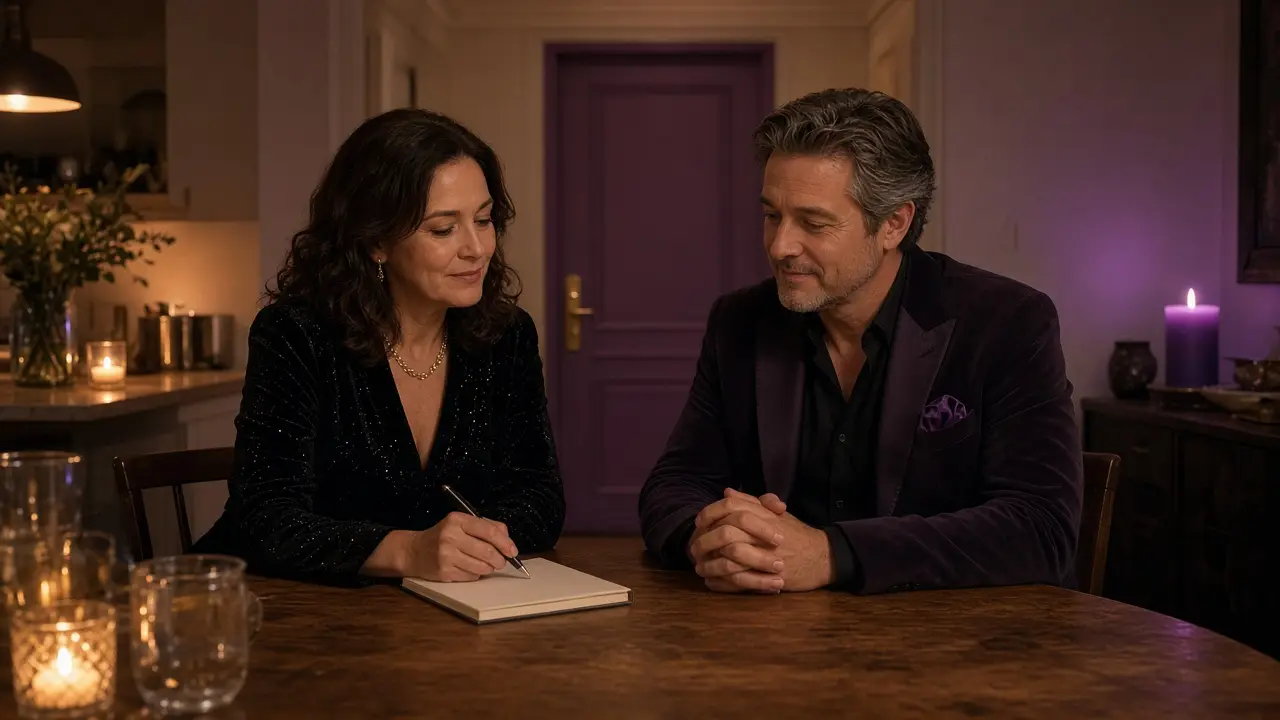
The host invites friends they'd love to have there. For a first night, keep the list short and pick one format. All mutual-yes matches are revealed.
The short answer
Hosting your first party is a short list and one format. Your host invites friends, and on this night that host is you. Write the names you would actually let in. Send one private link per couple. Hold the street until you are finished deciding. There is no public calendar, and no post that fills the empty chairs.
Pick a key party, a play party, or a speed date before you write the invite. All mutual-yes matches are revealed. A first night that tries to be all three is a night nobody packed for. The longer host guide is the hub for later. This page is the first Saturday.
Adult only. Private by design. Guests confirm they are 18 or older. You still check them in. A small room is a success. A full room with someone you are still unsure about is a flatter night than four people who came ready.
Write the names before the invite
The host invites friends they'd love to have there. For a first party, that can be two other couples, or three. Couples you have already been honest with. A couple who is visiting, only if you actually want them. A single only if the room is open and you picked that person by name.
A friend of a friend is not a sure yes. If you would hesitate to say their name out loud at the table, do not send a link. A plus-one does not get a link of their own. A vouch still has to be someone you would greet at your own door. The privacy of the night is this list. It is not a line you add at the bottom of a text.
Say the shape of the room in the first text. Couples only, or an open room. Straight, bi-friendly, or open. People should know who else might be there before they pack. You will not see your own partner as someone to pick. Wait until you have heard from both people in a couple, not only the one who answered first.
Pick one night
Name the format in the first line of the invite. A key party, a play party, and a speed date reveal matches at different moments. All mutual-yes matches are revealed. Guests should pack for the night you named, not for the night they hoped you meant.
- Key party. Before the party, each person privately picks who they would like to play with. You will not see your own partner as someone to pick. At the party, every match where you both said yes is revealed at the same time. You see one Play Partner: one photo and one name. No one is paired with someone they did not pick.
- Play party. You still say yes or no in private. Mutual matches are revealed when the host checks that guest in. There is no room-wide Round 1.
- Speed date. You meet each couple for about five minutes. As a couple you say yes or no. Either partner can answer, and either can change it until the host starts the next round. A match needs both couples to say yes.
Which format fits a first night
A speed date is the easiest first host night if the people do not know each other well. They sit, they talk, they answer. You reveal the mutual matches when the rounds end. The host guide for that format walks through the clock. You do not need a play space for the first hour.
A play party fits if the list already knows each other and you want them to move through the house. Matches open when you check each guest in. There is no room-wide Round 1. The play party host guide is the longer note. For a first night, keep the rules to one line each and the list short enough that you can see every face.
A key party is the signature, and it wants a room that can look up together. One Play Partner, one photo, one name, at the same time. It is a beautiful first night when the list is small and the trust is real. It is the wrong first night if you are still adding names the afternoon of the party. Read that host guide before you promise the reveal.
Send the link, hold the street
Send the link a few days out, with the format, the day, and the shape of the room. Leave the street, the floor, and the door code out of that text. A place name is enough for someone to judge the drive. The address is for the people who are actually coming, and only when the list is finished.
Email says Your event, or a public-safe name you chose. The real party name stays in the app. Group chat is one room, for the time you start and the time you end. It is not where the porch goes. Message host is how a guest asks you a private question. Do not answer that question by dropping the address into the group.
A house and a hotel floor can both stay private. You do not leave a sign on the door. You do not put the address in a text someone will screenshot from a bar. In a hotel, send the tower and the floor when you are ready for people to come up. Say where to leave the car, and say when the night ends. The invitation guide is the longer note on the words. This page is about what a first invite is allowed to carry.
Rules, then a test party
House rules are one line each. Dress, phones, which rooms are closed, soft or full, and what a no means in the room after a match appears. Guests agree before they swipe. If you edit the rules, they agree again. A rule you only say at the door is a rule half the room missed.
Phones stay down in the play space. No photos of guests. Name the closed room so nobody has to guess. A match is the floor, not a command. Anyone can slow down after a name appears. Say that in the rules if you want it said before the first card. The checklist is the longer packing list. Use it, and then cut anything you will not actually do on night one.
A test party lets you walk the night as a guest before anyone real is invited. Test parties do not send email, push, or reminders. Open the link. Agree to the rules. Check in. Look at a mutual match. Then invite the people you would actually want in the room. Your friends are not the dress rehearsal.
You check people in
Only the host checks people in. A door code and a QR pass are for the list. Guests cannot check themselves in. A code in a text is a code that gets forwarded to someone who was never discussed. On a first night, that is how a stranger ends up on a porch you have not hosted before.
If a couple arrives with someone you did not write down, they wait outside while you decide. The kind version of that moment is the sentence you already put in the invite: the link is for the two of you. You do not have to invent the policy on the step.
Name the end time out loud when people arrive, and again when you mean it. A first party that drifts is how the neighbors meet the night. Thank people as they go. Do not start a second round because the room feels warm. You can host again. You do not have to spend the whole first night proving you can.
A first party in a real city
The city pages are about a private list in a real place, not a calendar of clubs. If you host in Atlanta, Denver, Miami, Chicago, or Las Vegas, read that page before you write the invite. It will tell you which neighborhoods are different rides, and why the street stays off the first text.
A first party does not need the skyline. It needs a room you control, a list you would say out loud, and an end time. A hotel floor is honest when half the list flew in. A house is honest when you know the porch and the neighbors. Either way, you send the address when you are ready, not when someone asks in a comment.
If the party near you does not exist yet, this is how it starts. Four to six people. One format. One link each. The near-me page says the same thing without a city name. Search can find this guide. It cannot find your door.
FAQ
How many people should a first party have?
A short list. Two or three other couples is enough. The host invites friends they'd love to have there. A full room with someone you are unsure about is a flatter night.
Which format should I pick first?
One of them. A speed date if people should sit before they answer. A play party if the list already knows each other. A key party if you want one shared reveal. All mutual-yes matches are revealed.
When do I send the address?
When the list is finished and you want them to come. The first text can name the area. It should not include the street, the floor, or the door code.
Do I need a test party?
Yes, before the real links go out. A test party lets you walk check-in and the reveal as a guest. Test parties do not send email, push, or reminders.
Can I post the night to fill empty chairs?
No. A post is how a stranger finds the block. If the list is short, host the short list. If you want a club with a public door, use the club's own site.
Who lets people in?
You do. Guests show a door code or a QR pass. They cannot check themselves in. Do not forward a code, and do not add a plus-one at the door.