Adult only. Private by design.
How to host a car key party
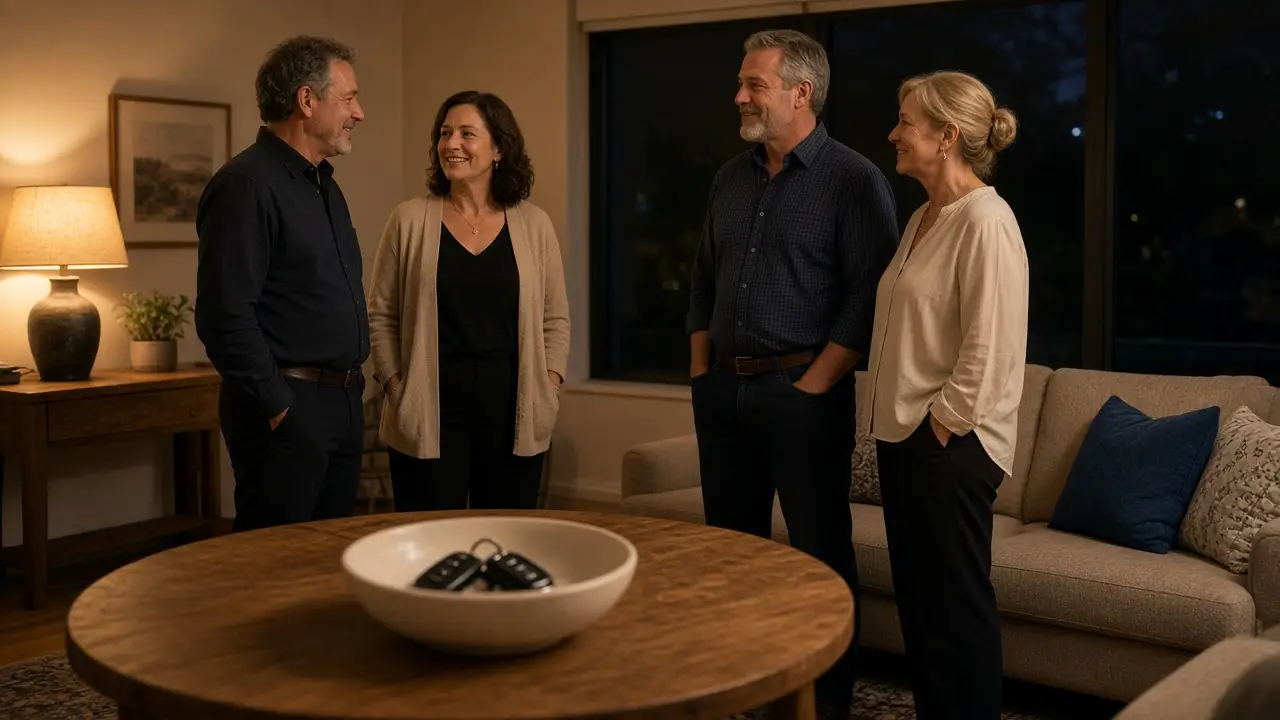
A car key party is a private adult key party with a bowl of keys on the table. It is not a film plot, and it is not a trip. You invite the room. The host starts one shared reveal, and the room sees one person only if both people said yes.
How it works
Key party
Swipe the room
Before the party. Yes on everyone you want.
Example
Swiped 0 of 4Yes: 0 of 322h 59m
 ReeseAboutCardsStatusHostChatProfile
Talk first
The room can talk before anyone checks in.
Example
BBlakeSave me a slow song.6:38 PM
Only if you keep that smile.6:39 PM
QQuinnThat look is dangerous.6:40 PM
You make it easy.6:41 PM
QQuinnCome find me after check-in.6:42 PM
Count on it.6:43 PM
Message the groupPartyHostChatProfileCheck in
The host checks you in for the reveal.
Example
Message hostYour check-in code
Show this QR to the host
3WLNFRQJThe host checks you in at the door.
A yes only shows when they said yes too. A one-sided yes stays hidden.
PartyHostChatProfileThe reveal
The room waits, then sees one match.
Example
The reveal
Everyone's here. Reveal in
3PartyHostChatProfileOne match
One person. Only if you both said yes.
Example
Round 1
Your play partner
ReeseMutual yes
One play partner.
PartyHostChatProfile
The short answer
People use car key party for the old picture: a bowl, a draw, and whoever owns the key. You can host that night without letting the bowl choose. Invite people you already want in the room. Each couple gets one private link. They say yes or no in private before anyone looks up.
The bowl can stay. Real car keys, house keys, or blank tags all read as the same prop. The bowl is the theme. It is not the pairing. When you are ready, you start one shared reveal. Phones wait about ten seconds. The room sees one person, and only if both people said yes.
You confirm you are 18 or older. The host still meets you at the door and checks you in. A private no stays private. A yes from only one person stays hidden.
Keep the bowl, change the draw
If you want the bowl on the table, put it there. Tell people in the first note that the keys are a prop, so nobody thinks a hand in the bowl is the match. Films repeat the draw. Your room does not have to.
How to plan a key party starts with the list, not the bowl. Say it is a car key party in that first note, so nobody arrives dressed for a different night. Put the rules in the same note: phones, rooms, what a no means, and that you start the reveal. Guests agree to those lines before they answer. If you edit a line, they agree again.
Each person is one photo and one name. Your own partner is never someone you answer about. A yes from one side is not a match. Later rounds, if you run them, are still one person at a time for the whole room. You are not reading names off keys, and you are not pairing people by hand in front of the couch.
Who gets a link
Write the names before you buy tags for the bowl. Couples you already know. A short list you trust is a calmer night than a full room that still includes someone you would not leave alone with a drink. People join when you send a private link, or when they apply and you approve them. An application does not put someone in the room. A maybe does not get a link until they are a yes.
One private link per couple. A friend of a friend does not inherit a spare. If you are unsure, leave them off and say so before the night, not in the hallway. An open room can include a single guest you picked on purpose. Say that in the first note. Do not add them at the door because the couch looks empty.
Say the shape of the room in the same breath. A straight room is couples of one man and one woman, with no singles. Bi-friendly allows same-gender couples and does not add singles. An open room can include singles you picked. Open is who was invited. It is not the same as bi-friendly. You can change that only before answers close. People pack for the sentence you sent. Partners can see each other's yes and no while answers are still open, if you left that comparison on. Nobody else sees those answers. You can turn that off for the whole party.
Rules that belong in the invite
One line is one rule. Dress, phones down during the reveal, no photos of other guests, which rooms stay closed, where drinks live, and what time the door closes. Say what a no means in your house. A no to the night means they tell you, and you do not check them in.
A match is not a menu of acts. Either person can slow down or stop. The lower yes is the ceiling. If the bowl makes the room feel like a dare, say out loud that the prop does not raise the ceiling. Write that line where people agree to it, not in a toast after the second drink.
Do not hide a rule in the chat and hope people scroll. The agreement is the agreement. If you would be unhappy to see it broken, it belongs in the list they accept. Save the set if you host this shape again, and start from it instead of rewriting it in a rush.
What the room actually sees
You start the reveal. Phones wait about ten seconds, then the room sees one person, only if both people said yes. A private no stays private. A yes from only one person stays hidden. You do not announce who passed, and you do not draw a name from the bowl to fill a gap.
You can send one stronger yes during the party. It is a flourish, not a match by itself. If both of you sent it, the reveal can say so. It still needs an ordinary yes from both people. A key in a bowl does not turn a one-sided yes into a match.
If both partners needed to finish their answers and one did not, that couple is not in the reveal. Say that in the rules so it is not a fight in the hallway. Check-in opens on party day, after answers close. You still confirm age at the door. Someone who is not on the list does not get a pass.
The address and the door
Hold the street until you mean for people to drive. A place name can go out earlier, so they can judge the trip. Email and reminders use a public-safe name, or the words Your event, instead of the real party name. Do not paste the street in the group chat.
Each guest has a door code and a QR pass. Only the host checks people in. A guest cannot check themselves in, and they cannot check someone else in. A code that gets forwarded is an invitation for a person who was never discussed. If someone would rather sit the night out, they tell you. That is a complete answer.
A co-host can help at the door. A co-host cannot delete the party or remove the original host. A message to the host stays with you and any co-hosts. Guests do not message each other in private. The group chat is one room, for timing and the theme, not for a side thread.
Home, a hotel, or a different night
A house you know is the usual room. You know the porch, the neighbors, and the end time. A hotel works when the list is small or someone is coming from out of town. You still send the private links. You still hold the room number until you are ready. A front desk is not your door pass.
A play party is a different night. People say yes or no to one person, unless you set the night so couples answer together. You close the answers, check guests in, and then open the matches. Checking someone in does not open the names. There is no single pairing for the whole room.
A speed date is a clock. People stay dressed. A new party starts at five minutes a round, and you can change the length, pause, add time, or skip ahead. A match needs both couples to say yes. You see both names and one photo of the couple. The bowl does not turn those nights into a car key party. Pick one format before you send the invite.
How you actually host one
Start from the host home and pick a key party before you promise a time. Write the rules, name the bowl as a prop, and send links only to the list you would let in. If someone applies, they are in only after you approve them. Leave the street, the floor, and the door code out of that text.
A test party lets you walk the night as a guest, including either partner, before anyone you know is invited. Test parties do not send email, push notifications, or reminders. Start the reveal once, and confirm that a one-sided yes never appears. The same screens run the real night once the list is real.
When the list and the rules are written, start from the host home, read the hosting help, and start from the key party page. Put the bowl on the table if you want it. You still start the reveal. The keys do not.
FAQ
Do we have to use real car keys?
No. The bowl can hold car keys, house keys, or blank tags. It sets the theme. The host still starts one shared reveal, and the room sees one person only if both people said yes.
Who do I invite?
People you already want in the room. One private link per couple, or an application you approve. Say it is a car key party, and say the rules, before anyone drives over.
What belongs in the house rules?
The dress, the phones, the rooms that stay closed, and what a no means in your house. Guests agree before they answer. If you edit a rule, they agree to the new line.
Can the party be at home or in a hotel?
Yes. Home is the usual room. A hotel works when you still send the private links and you still hold the room number until you mean to send it.
When do matches show?
When you start the reveal. Phones wait about ten seconds, then the room sees one person, only if both people said yes. A private no stays private. A play party is the other night: you close the answers, check guests in, and then open the matches. A speed date is short rounds, then yes or no.
When the list is ready, you can host a key party. You can start hosting from your own list.