Adult only. Private by design.
On premise vs off premise
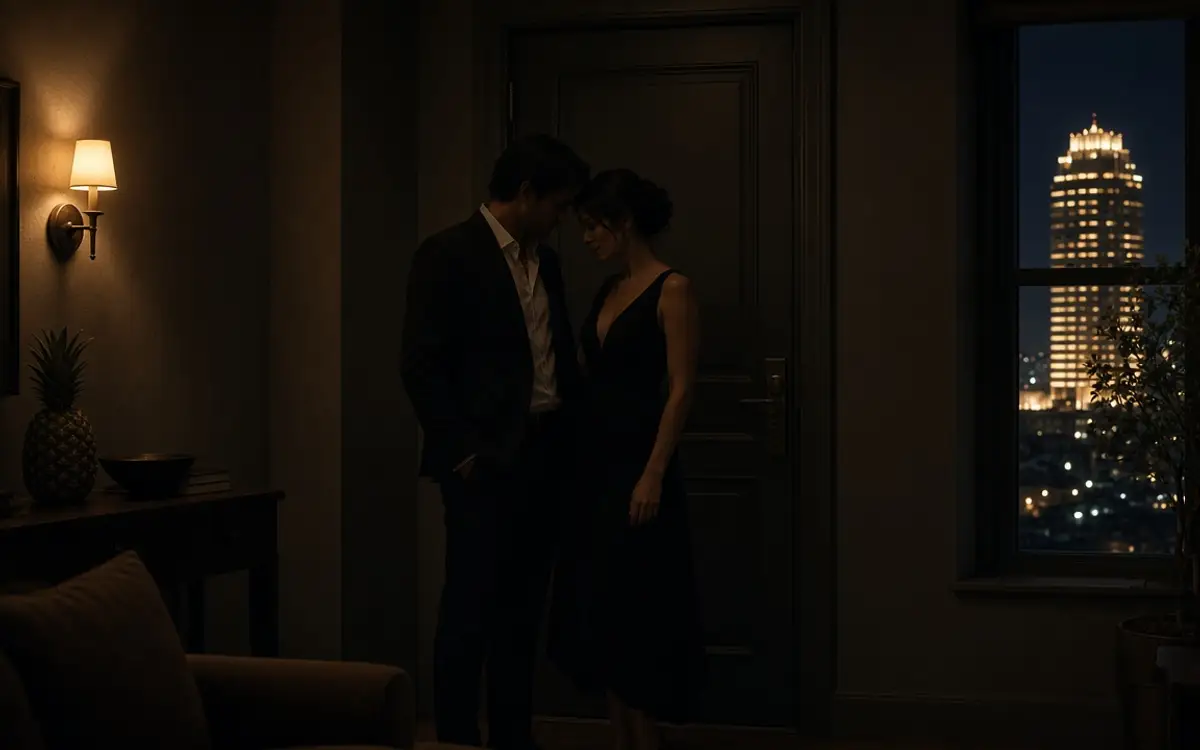
On premise means the heat, if it happens, happens at the party. Off premise means you flirt here and take it somewhere else. The version you want is the one you both named. The other version is a stranger's car.
The short answer
On premise vs off premise is about the address of the sex, not how far it goes. On premise: if people play, they play in this house, this suite, this club room. Off premise: this stop is for meeting, and anything more happens later, somewhere else, because the people involved still want it.
Soft swap, full swap, same room, and separate room are different lines. You can run an on premise soft night. You can run an off premise night where nobody even kisses. Do not let one phrase do the work of four. There is no switch for soft or full. Soft usually stops short of intercourse with someone else. Full includes it. The house rules have to say the line.
Adult only. Private by design. The app will not move the party to a hotel for you. A private no stays private. A one-sided yes stays hidden. It will not turn a good conversation into a ride you did not offer. If you are the one writing the night, start hosting and put the premise in the first line.
What on premise actually means
On premise is a place that can hold the night. A living room with a rule about the bedrooms. A hotel suite the host booked. A club room with a door that locks from the inside and a host who still knows who is in it. Guests arrive knowing play may happen here, and they can still want none of it.
The heat is proximity. You do not have to invent a second plan late. The risk is assuming the building is consent. A bed in the house is not a yes. A name appears only when both people said yes. That is permission to ask, not a bed. The lower yes still wins, in the room, with clothes still a choice.
Say which doors are in play. The guest room is on. The office is off. The club's play side is on, the bar is not. A party with no map of the doors is how someone gets walked into a room they thought was coats. Only the host checks people in. A door code or a QR pass is not a yes to a bedroom.
What off premise is asking for
Off premise is a meet with a later. Drinks, a long look, a yes you can still take back in the parking lot. If two couples want more, they leave. They do not start on the host's couch because the playlist got brave. The host offered a room for talking, not a bed they forgot to mention.
It is also a logistics problem people romanticize. Who drives. Whose hotel. Whether both partners are in the car. An off premise yes at the party is not a reservation. It is a maybe that has to be said again at the next door, sober enough to mean it. Nobody owes anyone a ride.
Some couples love this shape because the party stays social and the private part stays private. Some hate it because the best chemistry dies in the car on the way to a second place. Both are allowed. Springing the other shape because the room got loud is not.
This is not same room vs separate room
Same room means partners can see each other. Separate room means they split. On premise can be either. You can all stay in one hotel suite, in sight. You can offer bedrooms with doors. Off premise can still be same room later, at the place you actually chose. Do not use on premise as a synonym for a pile, or off premise as a synonym for polite.
A key party that is on premise still shows one person, and only if both people said yes. The host starts the reveal. Phones wait about ten seconds. Later rounds are still one person at a time. One stronger yes can be sent in the party. If both people sent it, the reveal can say so. It is not a match by itself, and it does not assign a bed. If both partners needed to finish and one did not, that couple is not in the reveal.
A play party that is off premise still waits until the host closes the answers, checks people in, and then opens the matches. Matches do not open by themselves at check-in. Checking someone in does not open the names. Each guest sees one person at a time, where both people said yes. Those names are people you may talk to tonight, not a key to someone else's apartment. On a play party the list of matches does not announce the stronger yes. It is not a match by itself. A speed date stays dressed either way. A new party starts at five minutes a round. The host can change that length, pause a round, add time, or skip ahead. A match needs both couples to say yes.
Say it before anyone gets a link
Have the talk at home. One of you may want the option of a bedroom down the hall. The other may want anything further to happen after you have left. The night you host is the stricter of the two, unless you are ready to explain two permissions to every guest. Most houses should not. The lower partner's yes is the ceiling.
Then the invite says it in one sentence. On premise, bedrooms as marked. Off premise, no play here, and no pressure to leave together. A couple who wanted the other night declines on Tuesday. A no at the coat pile is still allowed. Say it to the host. A private no stays private.
If the host left partner comparison on, you can see each other's yes or no while answers are open. Nobody else sees those answers. The host can turn that off for the whole party. Comparison tells you who you both marked. It does not tell you whether the guest room is in play. Say that part in your own words. The street stays hidden until the host releases it.
Put the premise in the house rules
House rules are one line, one rule. Guests agree before they say yes or no. If you edit the line, they agree again. On premise, play only in the guest room and the den is a clean line. Off premise, clothes stay on and nobody leaves together from our driveway unless they say it outside is a clean line. We are relaxed about it is not.
Name the exit too. On an off premise night, leaving together is the guests' business once they are outside, and it is still not a hunt. On an on premise night, the host still ends a scene that breaks the rule they wrote. They are not a concierge for your hotel. You confirm you are 18 or older before you arrive. The host still checks you in. When the line is yours to write, start from the host home. The hosting help is the walkthrough for the rules and the door.
The premise does not change the door
On premise or off premise, you get in the same way. A host invites you, or you apply and that host approves you. An application does not put someone in the room until the host approves it. An application is a request, not a seat. Until that approval you are not on the guest list, and you do not see the street. A yes to the invite is a yes to come. It is not a yes to a bedroom, and it is not a yes to leave together.
Check-in opens on the day of the party, after answers close. Only the host checks people in. A guest cannot check themselves in. The room shape is a different sentence from the premise. A straight room is every couple one man and one woman, with no singles and no same-gender couples. A bi-friendly room allows same-gender couples and still has no singles. An open room allows singles. Open is who was invited. It is not the same as bi-friendly, and it is not the same as on premise. The host can change that shape only before answers close. You answer the people you are open to.
Mail and reminders use a public-safe name, or the words Your event, so the real party name stays out of the inbox. A co-host can help at the door. A co-host cannot delete the party or remove the original host. Group chat opens when someone joins. A message to the host stays with the host and the co-hosts. Guests cannot message each other in private. Run a test party before the real invite and walk it as a guest, including either partner. A test party does not send email, a push, or a reminder.
If the party is in a hotel, the bill for the room is paid to the hotel. This page will not invent that bill. On premise means the address you already named. Off premise means the next address is still a separate yes.
FAQ
What is the difference between on premise and off premise?
On premise means play, if it happens, happens at the party. Off premise means this stop is for meeting, and anything more happens later, somewhere else.
Is on premise the same as full swap?
No. On premise is where. Full swap is how far. You can be on premise and soft, or off premise and explicit later. Say both lines.
Does a hotel suite count as on premise?
Yes, if the party is in that suite and play is allowed there. A hotel you might book after the bar is off premise. The invite should say which one you mean.
Can we change from off premise to on premise at midnight?
Only out loud, with every person who would be in it, including your partner. A mood is not a new house rule. Silence is not a yes.
Should the invite say which one it is?
Yes. On premise or off premise, in a sentence a tired person can understand. A couple who wanted the other night should be able to decline before they answer anyone.
When the list is ready, you can host a play party.